Home ::
Business China ::
Science & Technology ::
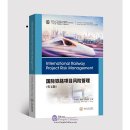
China Railway Engineering A Comprehensive Guide to Design & Construction, BIM Technologies, and International Standards
In this new era of global infrastructure connectivity, China’s railway engineering is reshaping the world’s transportation landscape through dual drivers of technological innovation and cultural confidence. From the arduous beginnings of Zhan Tianyou’s pioneering work on China’s first self-designed railway in 1909 to today’s world-leading high-speed rail network and internationally recognized technical standards, China’s century-long railway journey is not only a history of technological breakthroughs but also a magnificent chapter in national rejuvenation. This book aims to provide railway professionals with a textbook that combines technical depth and global vision, empowering China’s railway technologies, standards, and culture to thrive worldwide.
As China’s high-speed rail expands globally, the international engineering market increasingly demands interdisciplinary talent proficient in technical expertise, international regulations, and cross-cultural communication. However, existing textbooks often focus narrowly on specialized fields, lacking integration of international engineering practices and systematic alignment of Building Information Modelling (BIM) technology with global standards and Chinese engineering experience. Grounded in railway projects under the Belt and Road Initiative, this book targets the cultivation of “technology + language + regulation” trilingual engineers. It systematically compiles China’s railway design and construction technologies, BIM lifecycle applications, and international standard frameworks, offering a balanced blend of theory and practice to support China’s global railway competitiveness.
Compared to existing publications, this book innovates in four key dimensions:
1. Integration of BIM Technology Across the Railway Lifecycle
Using BIM as a thread weaving through the entire railway lifecycle, this book systematically aligns international standards with Chinese engineering practices. From route design (Chapter 2), track engineering operation and maintenance (Chapter 3), CRTS ballastless track construction (Chapter 4), to digital contract claim management (Chapter 6), enabling full-process BIM empowerment from design to maintenance. Case studies like the Beijing-Zhangjiakou High-Speed Rail exemplify China’s pioneering BIM standards in digital twins and intelligent maintenance.
2. Analysis of International BIM Standards and Global Alignment of Chinese Standards
This book deconstructs and interprets ISO 19650 (Chapter 7) and the UK PAS 1192 (Chapter 8) frameworks through a systemic lens, focusing on ISO’s asset delivery workflows toprovide Chinese engineers with a “panoramic navigation” of global engineering rules. By articulating China’s Railway BIM Standards (Chapter 9) in English, it offers dual-track solutions—“Chinese Standards + International Rules”—for Belt and Road cooperation, accelerating China’s transition from “practitioner” to “rule-setter.”
3. Multidimensional Integration of Technical Learning and Ideological Education
A “techno-historical” narrative framework intertwines China’s century-long railway evolution with professional pedagogy. Key milestones—such as Zhan Tianyou’s “herringbone rail design” (Chapter 1, symbolizing indigenous innovation), the fully independent CRTS III track system (Chapter 4), and the “Modular Drive, Axial-Surface Coordination” theory (Chapter 5)—highlight China’s original contributions to intelligent railway construction. This approach contextualizes technological progress within national rejuvenation, fostering cultural identity and professional sense of mission.
4. Global Expression of China’s High-Speed Rail Expertise
Core railway engineering concepts—such as horizontal/vertical alignment design principles (Chapter 2), track system components and applications (Chapter 3), and CRTS I/II/III ballastless track materials (Chapter 4)—are elucidated in concise English, supported by 3D diagrams and construction flowcharts to enhance accessibility for non-native readers. Detailed English explanations of CRTS track design and construction processes, including equipment and methodologies, showcase China’s breakthroughs while bridging global communication gaps. This strengthens cross-cultural communication skills, transforming theoretical knowledge into actionable expertise.
……
Table of Contents
Chapter 1 Introduction 001
1.1 The Belt and Road 002
1.1.1 History and Background 002
1.1.2 The Belt and Road Initiative 003
1.1.3 Euro-Asian Transport Links (EATL) Rail Route 005
1.2 Development of Railway in China 008
1.2.1 China Railway History 008
1.2.2 China’s Normal Rail 012
1.2.3 China’s High-Speed Rail (HSR) 014
1.3 Extended Reading 018
Chapter 2 Alignment Engineering 021
2.1 Fundamentals of Alignment Selection 022
2.2 Horizontal Alignment 024
2.2.1 Straight Sections 025
2.2.2 Circular Curves 026
2.2.3 Transition Curves 028
2.2.4 Process of Horizontal Alignment Design 031
2.3 Vertical Alignment 033
2.3.1 Maximum Gradient 033
2.3.2 Minimum Gradient Length 034
2.3.3 Minimum Vertical Curve Radius 035
2.3.4 Process of Grade Line Design 036
2.4 Station Distribution 038
2.5 BIM in Alignment Engineering 041
2.6 Extended Reading 048
Chapter 4 Ballastless Track (Slab Track) 076
4.1 Introduction to Slab Track 077
4.1.1 Definition and Basic Concepts 077
4.1.2 Overview of CRTS (China Railway Track System) 079
4.1.3 Applications of ballastless track in High-Speed Rail Systems 080
4.2 CRTS I: Design and Construction 082
4.2.1 Components and Design Principles of CRTS I 083
4.2.2 Construction Techniques for CRTS 1 087
4.3 CRTS II: Design and Construction 093
4.3.1 Components and Design Principles of CRTS II 093
4.3.2 Construction Techniques for CRTS II 097
4.4 CRTS III: Design and Construction 102
4.4.1 Components and Design Principles of CRTS III 103
4.4.2 Construction Techniques for CRTS III 106
4.5 BIM in Ballastedless Track Design and Construction 109
4.6 Extended Reading 115
Chapter 5 Intelligent Construction and BIM Practices in China’s High-Speed Railways 118
5.1 High-speed Railway Intelligent Construction Concept 119
5.2 Model-Data Integration 121
5.2.1 Conceptual Framework of Model-Data Integration 127
5.2.2 Platform Architecture of Model-Data Integration 129
5.2.3 Key Technologies for Model-Data Integration 131
5.3 Model-Data Driven, Axis-Facet Collaboration Theory 132
5.3.1 Model Architecture 132
5.3.2 Optimization Design 134
5.3.3 Operation Mechanism 135
5.4 Railway BIM Construction 137
5.4.1 Essential Characteristics of Railway BIM Construction 137
5.4.2 Development and Organization of Railway BIM Construction 139
5.4.3 BIM-based Collaborative Design 142
5.4.4 Intelligent Construction 144
5.5 The Innovative Demonstration Application of BIM in the Beijing—Zhangjiakou High-Speed Railway 149
5.5.1 BIM-Based Multi-Disciplinary Collaborative Design Platform 150
5.5.2 Intelligent Bi-Block Sleeper Yard for Digital Manufacturing 151
5.5.3 Intelligent Construction of Subgrade, Bridges, Tunnels, and Stations 151
5.5.4 BIM+GIS-Based Engineering Management Platform 153
5.5.5 Design-Construction Modular Integration Delivery and Axis-Facet Collaborative Application Innovation 155
5.6 Extended Reading 158