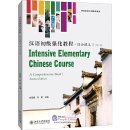
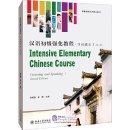
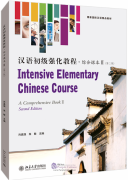
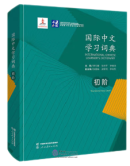
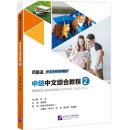
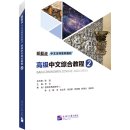
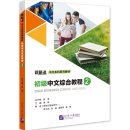
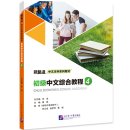
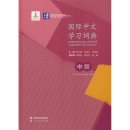
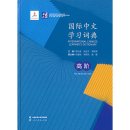
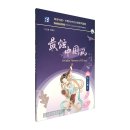
This book is a specialized reading textbook designed for Chinese learners who have mastered approximately 2,000 commonly used words or have passed HSK Level 4. This textbook is based on the Chinese Proficiency Grading Standards for International Chinese Language Education, adheres to the integrated concept of “structure–function–culture,” and ensures that the cultivation of comprehensive “language + professional” competence runs through the entire process.
Each lesson begins with a “Reading Notes” section, which includes 2-3 pre-reading questions to guide students into the text with a clear purpose, sparking their interest and clarifying learning objectives. The reading texts are mostly selected from newspapers, magazines, and books published in recent years, covering topics that resonate with international students, such as family affection, love, family, education, social interactions, the internet, and Chinese culture. The genres include essays, news reports, commentaries, short stories, and other forms. While respecting the original texts, the editors have made appropriate adaptations based on students’ proficiency levels and instructional needs to ensure appropriate language difficulty. Each lesson is followed by exercises—such as true or false questions, multiple-choice questions, and Q&A—to check students’ reading comprehension. Additionally, each lesson includes four extended reading passages related to the lesson’s topic, which try to reinforce the key vocabulary and grammar points covered. These passages are designed to help students build relevant linguistic and cultural knowledge and improve their reading comprehension skills.
This textbook is suitable not only for undergraduate international students majoring in Chinese Language or International Chinese Language Education, but also for learners in training courses at home or abroad, as well as self-learners of Chinese. Each lesson is designed to be completed in two class hours, offering flexible teaching arrangements that are easy for instructors to implement.
About the Author
Zhu Tong, Ph.D., Associate Professor, serves as the Vice Dean of the International College of Chinese Studies at Beijing Language and Culture University. Her academic interests include International Chinese Language Education and Comparative Literature. She has published over ten papers in journals such as Chinese Culture Research, Hubei Social Sciences, and Journal of International Chinese Education.
Editorial Review
This textbook is based on the Chinese Proficiency Grading Standards for International Chinese Language Education, adheres to the integrated concept of “structure–function–culture,” and ensures that the cultivation of comprehensive “language + professional” competence runs through the entire process. It also follows the principles of practicality, scientific, targeted approach, practicality, and appeal.
1. Practicality: Each unit is organized around a specific topic to provide students with ample reading materials. It also emphasizes the recycling of high-frequency words, grammatical structures, common phrases, and idiomatic expressions. By increasing the rate of repetition, students can acquire vocabulary more effectively through reading.
2. Scientific: The textbook emphasizes accurate positioning and is compiled in accordance with the Chinese Proficiency Grading Standards for International Chinese Language Education. The selection of vocabulary, grammar, and topics, as well as the training of reading skills, follows the principle of progressing from easy to difficult in a step-by-step manner, which conforms to the laws of learning.
3. Targeted Approach: This textbook strives to ensure a close connection between beginner-level and intermediate-to-advanced-level Chinese reading materials. At the same time, it coordinates with and serves as a complement to comprehensive course textbooks at the same level.
4. Practicality: On the one hand, the textbook emphasizes the authenticity and practical value of the reading materials, helping students find the content useful, accessible, and motivating. On the other hand, its organization follows the logical principles and structure of classroom teaching, making it convenient, practical, and teachers friendly.
5. Appeal: The materials are carefully selected for their novelty, wide-ranging topics, and diverse genres, exposing students to a variety of texts across different styles and communicative contexts. This enables them to appreciate cultural diversity and inclusiveness, and to develop a mindset oriented towards communication and mutual understanding.
Suggestion
It is recommended to complete one lesson in two class periods (50 minutes per period). The first period is for studying the main text, and the second period is for completing the extended readings. The textbook provides a substantial number of extended reading passages. Teachers may select and use them as appropriate. The remaining passages can be assigned as homework for students to complete after class.