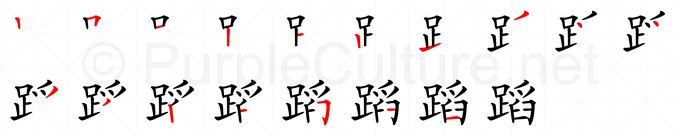
| 舞蹈HSK 6 | wǔ dǎo | dance (performance art); dancing | |
| 手舞足蹈 | shǒu wǔ zú dǎo | hands dance and feet trip (idiom); dancing and gesticulating for joy | |
| 赴汤蹈火 | fù tāng dǎo huǒ | to go through water and tread on fire (idiom); not afraid of any difficulty | |
| 循规蹈矩 | xún guī dǎo jǔ | to follow the compass and go with the set square (idiom); to follow the rules inflexibly; to act according to convention | |
| 重蹈覆辙 | chóng dǎo fù zhé | lit. to follow in the tracks of an overturned cart (idiom); fig. to follow a path that led to failure in the past; to repeat a disastrous mistake |
| 1 | Folk dances have a strong local flavor. | |
| 2 | The dancer's dynamic movements entranced the audience. | |
| 3 | Cha-cha is a very popular Cuban dance. | |
| 4 | There are many dance performances and musical plays at the party. | |
| 5 | She danced a cheerful dance, tapping with the rhythm. |
Copyright © Purple Culture Co., Ltd. 2001 - 2026. All right reserved.