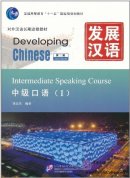
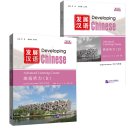
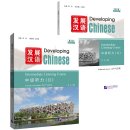
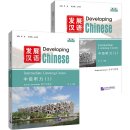
Developing Chinese (3rd Edition) is a set of systematic Chinese language teaching materials for adults that embodies the teaching concept of “development” and adopts the model of “integrating comprehensive language ability cultivation with specialized language skills training”, which can be divides into three levels (Elementary, Intermediate and Advanced) and six series (Comprehensive, Speaking, Listening, Reading, Writing and Elementary Reading and Writing), with a total of 28 volumes. Among them, the Comprehensive Series serves as the core textbook, while the Speaking, Listening, Reading, Writing, and Elementary Reading & Writing Series are supporting textbooks.
Developing Chinese (3rd Edition) Advanced Speaking Course (Ⅰ) aims to train and improve learners’ comprehensive advanced spoken Chinese expression ability and communication skills in social life. This textbook consists of 13 lessons and 1 activity page. The content is closely connected to real life, covering topics such as common life knowledge, life stories, questionnaires, debates, etc., with the intention of exposing learners to a wide variety of language materials as much as possible. Each lesson includes sections such as “Learning Expression”, “Warm-up”, “Text”, “In-class Activities & Tasks”, “Text Links”, and “My Gains”. The “Activity Page” is designed for oral tests, output presentations, or thematic activities. Guided by mind maps, it helps cultivate learners’ habit of thinking in Chinese and their critical thinking ability, while enhancing their awareness and ability of autonomous learning. Additionally, the mind map format in the Activity Page can also be used for the learning and review of each lesson.
About the Author
Li Quan, Editor-in-Chief, is a professor and doctoral supervisor at the School of Chinese Studies and Cultural Exchange, Renmin University of China. Professor Li is also a member of the National Steering Committee for Postgraduate Education of International Chinese Language Education, vice president of the Beijing Language Association, executive director of the International Society for Chinese Language Teaching, and editorial board member of various journals such as Chinese Teaching in the World and Applied Linguistics.
Editorial Review
1. Focus on Advanced Speaking to Break Through Expression Bottlenecks
Tailored for learners progressing from the intermediate level, it systematically trains authentic expression and discourse organization skills, helping learners move from the stage of “being able to speak Chinese” to the advanced stage of “knowing how to speak Chinese well”.
2. Vivid and Practical Topics to Stimulate Critical Thinking and Discussion
It selects hot topics in contemporary society (such as personalized education, online phenomena, environmental issues, etc.). Through the comparison of pros and cons and the design of segmented texts, it cultivates learners’ logical thinking and impromptu expression abilities.
3. Authentic Spoken Language Input for Practical Application
The texts feature standardized expressions from real scenarios. By providing diverse vocabulary and sentence pattern input, it helps learners master core language points and flexibly apply them to similar topics, enabling creative expression through drawing inferences from one instance.
4. Hierarchical Task Design for Progressive Improvement
Ranging from basic vocabulary exercises to comprehensive discourse output, the activities are designed from easy to difficult. Combining task-based learning and independent practice, it gradually guides learners to consolidate skills and naturally improve the fluency and accuracy of their spoken language through interaction.
5. Mind Map Assistance to Develop Chinese Thinking Habits
The “Activity Pages” and mind maps in the textbook guide learners to organize ideas and sort out logic in Chinese, gradually forming a Chinese thinking mode and making their expression more natural and authentic.
Suggestion
This textbook is suitable for learners who have completed Developing Chinese (3rd Edition) Intermediate Speaking Course (Ⅱ) or other intermediate Chinese textbooks of equivalent proficiency, and have reached the entry-level of advanced Chinese speaking.
This volume contains 13 lessons and 1 activity page, which is suggested that 4 class hours be allocated for each lesson.