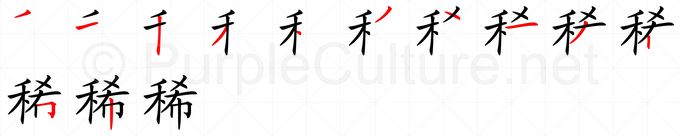
| 珍稀HSK 6 | zhēn xī | rare; precious and uncommon | |
| 稀少 | xī shǎo | sparse; rare | |
| 稀疏 | xī shū | sparse; infrequent; thinly spread | |
| 依稀 | yī xī | vaguely; dimly; probably; very likely | |
| 稀奇 | xī qí | rare; strange |
| 1 | The air at the top of the mountain is thin. | |
| 2 | This morning, my baby had a bowl of porridge and an egg for breakfast. | |
| 3 | Although he is over seventy, Uncle is very healthy and often goes hiking. | |
| 4 | As the leaves became fewer and fewer, the figures of Liang Shanbo and Zhu Yingtai were revealed on the branches. | |
| 5 | Babies can try some porridge or congee before they start eating solid food. |
Copyright © Purple Culture Co., Ltd. 2001 - 2026. All right reserved.