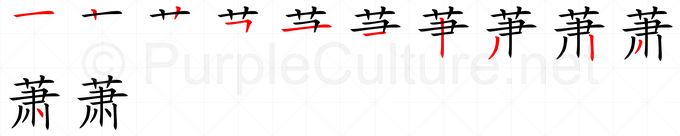
| 萧条 | xiāo tiáo | bleak; desolate; (economic) depression or slump | |
| 萧瑟 | xiāo sè | to rustle in the air; to rustle; to sough; bleak; desolate; chilly | |
| 萧索 | xiāo suǒ | bleak; desolate; melancholy | |
| 萧墙 | xiāo qiáng | (literary) screen wall shielding an entrance in traditional Chinese architecture | |
| 萧规曹随 | xiāo guī cáo suí | lit. Xiao's 萧何 (idiom); fig. to strictly adhere to the policies of the predecessor; to follow precedent |
| 1 | Now you go!' he said to Earnshaw. | |
| 2 | There is himself, Earnshaw, Zillah, Joseph, and I. | |
| 3 | Old Xiao thought that she was trying to pick faults and misinterpreting his meaning. | |
| 4 | English tourist Dean Kershaw, visiting the Christmas markets in Brussels with his family, is no fan of the European Union. | |
| 5 | Well, Mr Earnshaw,' she cried, `I wonder what you'll have agait next! |
Copyright © Purple Culture Co., Ltd. 2001 - 2026. All right reserved.