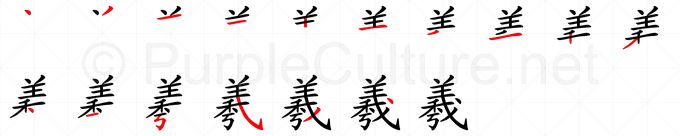
| 王羲之 | wáng xī zhī | Wang Xizhi (303-361), famous calligrapher of Eastern Jin, known as the sage of calligraphy 书圣 | |
| 黄宗羲 | huáng zōng xī | Huang Zongxi (1610-1695), scholar and writer of the Ming-Qing transition | |
| 伏羲 | fú xī | Fuxi or Fu Hsi, legendary Chinese emperor, trad. 2852-2738 BC, mythical creator of fishing, trapping and writing | |
| 羲皇上人 | xī huáng shàng rén | lit. a person before the legendary emperor Fuxi 伏羲 ; person from ages immemorial; fig. untroubled person | |
| 伏羲氏 | fú xī shì | Fuxi or Fu Hsi, legendary Chinese emperor 2852-2738 BC, mythical creator of fishing, trapping, and writing |
| 1 | The morning crowned it with splendour. | |
| 2 | In the twilight of the morning light seems active, darkness passive; | |
| 3 | Darcy, happy birthday, you are best! In future day, believed that you will be better. | |
| 4 | Ken, who plays the playboy Xi Men, thinks of himself as a die-hard romantic. | |
| 5 | " August 13, 1992, Comrade Jiang Zemin visited Tianshui, personally wrote the "Emperor Xi native place. |
Copyright © Purple Culture Co., Ltd. 2001 - 2026. All right reserved.