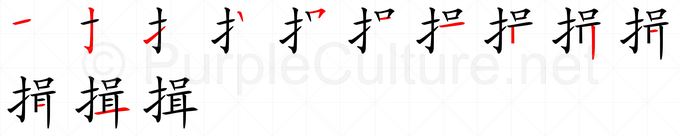
| 作揖 | zuò yī | to bow with hands held in front | |
| 打躬作揖 | dǎ gōng zuò yī | to bow respectfully with clasped hands; to beg humbly | |
| 开门揖盗 | kāi mén yī dào | leaving the door open invites the thief (idiom); to invite disaster by giving evildoers a free hand | |
| 罗圈儿揖 | luó quān r yī | to bow around with hands joined (to people on all sides) | |
| 长揖 | cháng yī | to bow deeply, starting upright with arms straight out in front, one hand cupped in the other, then moving the hands down to one's knees as one bows, keeping the arms straight (a form of greeting) |
| 1 | However, going is hind Lyu view slightly come along a reign lightly one Yi deeply, lightly the assistance clasps up the old man's hand. | |
| 2 | Pao-yu walked over to Pao-ch'ai and bowed deeply with his hands folded in front of him, saying: "Cousin, take good care of my mother and wait for my good news." | |
| 3 | Among them, the electronic grade sulfuric acid has been the largest in Japan and Asia Ibiden cooperation for 10 years, has become a user-free products; | |
| 4 | On January 1, 1909, six months before the Balmoral was to open, Mr. Banwell announced that all but two of the apartments were already let. | |
| 5 | The evidences in the historical records of ancient character and handwriting proved that China had some transportation means such as "carts" and "boats" on the system of "message passed by cart". |
Copyright © Purple Culture Co., Ltd. 2001 - 2026. All right reserved.