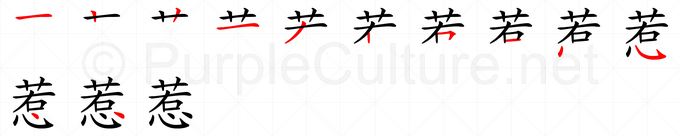
| 惹人 | rě rén | to provoke (esp. annoyance, disgust etc); to offend; to attract (attention) | |
| 招惹 | zhāo rě | to provoke; to tease | |
| 惹祸HSK 6 | rě huò | to stir up trouble; to invite disaster | |
| 惹事 | rě shì | to cause trouble | |
| 不好惹 | bù hǎo rě | not to be trifled with; not to be pushed around; stand no nonsense |
| 1 | I do not want to cause inconvenience to you. | |
| 2 | This child is too mischievous and always gets into trouble. | |
| 3 | His mischievous ways often got him into trouble. | |
| 4 | This child is too mischievous and often causes trouble. | |
| 5 | It's best not to provoke him. He has a bad temper. |
Copyright © Purple Culture Co., Ltd. 2001 - 2026. All right reserved.