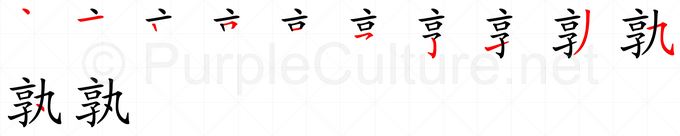
| 孰料 | shú liào | who would have thought?; who could have imagined?; unexpectedly | |
| 孰真孰假 | shú zhēn shú jiǎ | what is true and what is fake | |
| 孰能生巧 | shú néng shēng qiǎo | practice makes perfect | |
| 人孰无过 | rén shú wú guò | nobody is without faults (idiom) | |
| 人非生而知之者,孰能无惑 | rén fēi shēng ér zhī zhī zhě , shú néng wú huò | Knowledge is not innate to man, how can we overcome doubt?; We are not born with knowledge, how does one achieve maturity? (i.e. without guidance from a teacher - Tang dynasty essayist Han Yu 韩愈 ) |
| 1 | Which comes first, markets or democracy? | |
| 2 | Who is right depends on the answer to two questions. | |
| 3 | But which one comes first, happiness or success? | |
| 4 | This is not an argument about health insurance versus taxes. | |
| 5 | I weighed fame and love against each other and love won. |
Copyright © Purple Culture Co., Ltd. 2001 - 2026. All right reserved.