FEEDBACK

Meaning of 遗

Lookup via: Pinyin | Radicals
遗 (Trad.: 遺)HSK 5
Pinyin: yí
English Definition: to lose; to leave behind; to omit; to bequeath; sth lost; involuntary discharge (of urine etc)
Chinese Definition:
①丢失:遗失。遗落。
②漏掉:遗忘。遗漏。
③丢失的东西,漏掉的部分:补遗。路不拾遗。
④余,留:遗留。遗俗。遗闻。遗址。遗风。遗憾。遗老(a.经历世变的老人;b.仍然效忠前一朝代的老人)。
⑤死人留下的:遗骨。遗言。遗嘱。
⑥不自觉地排泄:遗尿。遗精。
⑦生物体的构造和生理机能由上一代传给下一代:遗传。
⑧抛弃:遗弃。
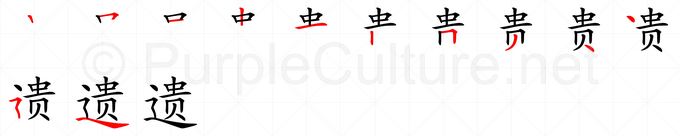
Total strokes: 13; Radical: 辵
Ideographic:To leave 辶 something valuable 贵 behind
Character Formation:
  • ⿺ Surround from lower left
    • 辶 [ chuò ] to walk; walking
    • 贵 [ guì ] expensive, costly; valuable, precious
Similar Characters: 溃
Step by Step Stroke Sequence: Download Customize Pin it
Stroke order image for Chinese character 遗
Example Words
遗憾HSK 5 yí hàn regret; to regret; to be sorry that
遗产HSK 6 yí chǎn heritage; legacy; inheritance; bequest; Classifiers: 笔
遗址 yí zhǐ ruins; historic relics
遗传HSK 6 yí chuán heredity; to inherit (a trait); to pass on (to one's offspring)
遗留HSK 6 yí liú to leave behind; to hand down
More:遗* | *遗 | *遗*
Example Sentences
1
我们对此事深感遗憾
。
We are deeply regretful about this matter.
2
这个城市有很多历史遗迹
。
This city has many historical sites.
3
政府致力于保护民族遗产
。
The government is committed to protecting national heritage.
4
我们需要尊重逝者的遗愿
。
We need to respect the wishes of the deceased.
5
古代的文化遗产非常珍贵
。
Ancient cultural heritage is very precious.