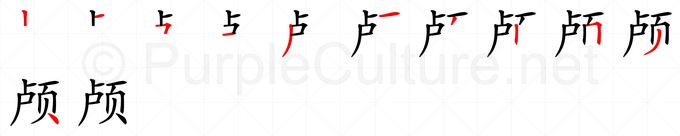
| 头颅 | tóu lú | head; skull | |
| 颅骨 | lú gǔ | skull (of a dead body) | |
| 颅底 | lú dǐ | base of the skull | |
| 头颅骨折 | tóu lú gǔ zhé | skull fracture (idiom) | |
| 圆颅方趾 | yuán lú fāng zhǐ | a human being |
| 1 | The portion of the skull enclosing the brain; the braincase. | |
| 2 | Out of 12 cranial nerves, five of them are picking up the data from around the mouth. | |
| 3 | Researchers found that craniofacial differences between contemporary men and women are less pronounced than they were in the 16th century. | |
| 4 | In other words, the brain, spinal cord, cranial nerves, peripheral nerves, nerve roots, autonomic nervous system, neuromuscular junction, and muscles. | |
| 5 | McNally-Gagnon and Hébert now plan to study earworms using MRI or Transcranial Magnetic Stimulation technology. |
Copyright © Purple Culture Co., Ltd. 2001 - 2026. All right reserved.